B 1/7 Mahanagar Extension ( Opp. Sahara India Centre ), Kapoorthala, Lucknow - 226006

Mon - Sat: 10:00am to 8:30pm
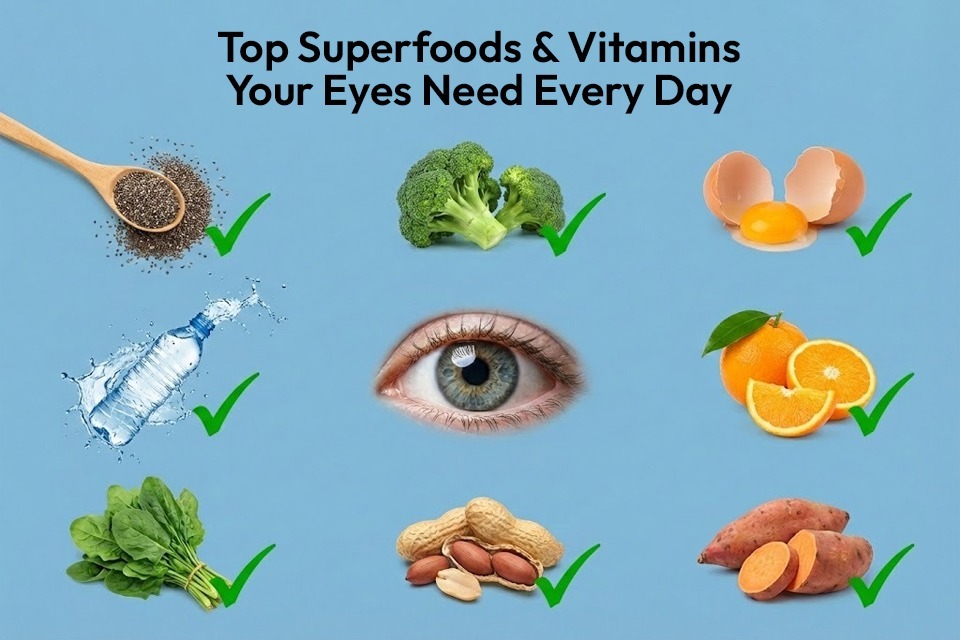
When we think about being healthy, we usually think about our heart, our weight, or our muscles. We go to the gym and eat salads to keep our bodies strong. But how often do we think about our eyes? Most people take their eyesight for granted until things start to get blurry. Your eyes are very small, but they are one of the most active parts of your body. They work all day, from the moment you wake up until you close them at night. To work this hard, they need the right fuel.
At Susanjeevani Hospital, we see many patients who are worried about their vision. While surgery and medicine are sometimes necessary, many eye problems can be delayed or prevented just by changing what you eat. Good nutrition is like a shield for your eyes. It protects them from the sun, from blue light, and from the natural wear and tear of daily life.
As a dedicated eye care hospital in Lucknow, we want to help you understand how your kitchen can be your first line of defense. In this guide, we will look at exactly what your eyes need to stay healthy and which foods you should add to your plate today.
Why Does Food Affect Your Eyes?
Your eyes are full of tiny blood vessels and very sensitive nerve cells. These cells, especially the ones in your retina, are constantly being hit by light. This process creates something called "oxidative stress." Think of it like rust forming on a car. Over time, this "rust" can damage your vision.
Antioxidants are natural chemicals found in food that stop this rust from forming. Certain vitamins and minerals go straight to your eyes to protect them. If you do not eat enough of these, your eyes become weak. This is why people who eat a poor diet often face vision problems much earlier in life. By choosing a trusted vision care center in Lucknow for your regular checkups and following a good diet, you can keep your sight sharp for much longer.
The Power of Vitamin A: The Night Vision Vitamin
Everyone has heard that carrots are good for the eyes. This is because carrots are loaded with Vitamin A. This vitamin is essential for a protein called rhodopsin. Rhodopsin is what allows your eyes to see in low-light conditions. If you have a Vitamin A deficiency, you might find it hard to see at night or in a dark room.
Vitamin A also keeps your cornea clear. The cornea is the clear front window of your eye. If it gets dry or cloudy, your vision will suffer.
Best foods for Vitamin A:
- Carrots and Sweet Potatoes
- Papaya and Mangoes
- Spinach and other dark leafy greens
- Milk and Eggs
Vitamin C and E: The Defense Team
Vitamin C is not just for fighting colds. It is also vital for the health of the blood vessels in your eyes. Since the eye relies on a constant flow of blood to stay healthy, strong blood vessels are a must. Studies suggest that Vitamin C can also reduce the risk of developing cloudy vision as you get older.
Vitamin E works alongside Vitamin C. It is a powerful antioxidant that protects eye cells from damage caused by unstable molecules. It acts like a protective wall around the delicate parts of your eye.
Best foods for Vitamin C and E:
- Oranges, Lemons, and Amla (Indian Gooseberry)
- Bell peppers (Shimla Mirch)
- Almonds and Peanuts
- Sunflower seeds
Omega-3 Fatty Acids: The Natural Eye Drop
If you spend a lot of time looking at a phone or computer, you might feel that your eyes are dry, itchy, or "gritty." This is often because the oily layer of your tears is not working correctly. Omega-3 fatty acids are healthy fats that help your eyes produce high-quality tears.
Beyond just fixing dry eyes, Omega-3 is also very important for the retina. The retina is the back part of your eye that sends signals to your brain. Dr. Mohit Khemchandani, our Vitreo Retina Specialist at Susanjeevani Hospital, often explains that the retina has a high concentration of Omega-3. If you don’t eat enough of these fats, your retina can become weak.
Best foods for Omega-3:
- Walnuts (Akhrot)
- Flaxseeds (Alsi) and Chia seeds
- Soybeans
- Fish (if you are non-vegetarian)
Lutein and Zeaxanthin: Internal Sunglasses
These two nutrients are perhaps the most important ones that many people have never heard of. Lutein and Zeaxanthin are types of antioxidants that actually live inside your retina. They act as a natural sunblock. They filter out harmful blue light from screens and the sun. By eating foods rich in these, you are essentially wearing sunglasses inside your eyes.
They are found in very high amounts in green, leafy vegetables. This is why doctors always tell you to eat your greens!
Best foods for Lutein and Zeaxanthin:
- Spinach (Palak)
- Mustard Greens (Sarson ka saag)
- Broccoli
- Corn and Peas
Zinc: The Mineral Helper
Zinc is a mineral that helps Vitamin A travel from your liver to your retina. Without enough zinc, the Vitamin A you eat might not even reach your eyes! Zinc is found in high amounts in the part of the eye that handles sharp, central vision. It helps create a protective pigment called melanin.
Best foods for Zinc:
- Legumes like Chickpeas (Chana) and Lentils (Dal)
- Pumpkin seeds
- Yogurt and Milk
- Whole grains
Top Eye-Health Superfoods You Should Start Eating Today
If you want to make a quick shopping list to help your vision, here are the top picks that provide the most benefit:
- Spinach and Kale: These are the kings of eye nutrition. They provide almost everything your eyes need to stay strong.
- Eggs: The yolk in an egg contains Lutein, Zeaxanthin, and Zinc. It is one of the most complete foods for your sight.
- Citrus Fruits: Oranges and lemons are cheap, easy to find, and great for your eye’s blood vessels.
- Nuts and Seeds: A small handful of almonds or walnuts every day provides enough Vitamin E and Omega-3 to make a real difference.
- Orange Vegetables: Sweet potatoes and carrots are not just for kids; they are essential for night vision at every age.
Foods to Avoid for Better Sight
Just as good food helps, bad food can hurt your eyes. High sugar and processed fats are the biggest enemies of your vision.
- Too much sugar: High blood sugar can damage the tiny blood vessels in your retina. This is why people with diabetes often have vision problems.
- Highly processed snacks: Foods full of "trans fats" can block blood flow to the eyes, which can lead to long-term damage.
- Too much salt: Salt can lead to high blood pressure, which is also bad for the delicate vessels inside your eye.
The Role of Hydration
We often talk about food, but water is just as important. Your eyes are made mostly of water. If you are dehydrated, your eyes cannot produce enough tears to stay lubricated. This leads to redness, irritation, and blurry vision. Drinking at least 8 to 10 glasses of water a day is one of the simplest ways to care for your eyes.
Expert Advice from Susanjeevani Hospital
While eating the right food is very helpful, it is not a "magic cure." You cannot eat a carrot and expect your glasses to disappear immediately. Nutrition is about long-term protection.
Dr. Mohit Khemchandani, our Vitreo Retina Specialist, always advises: "You can think of nutrition as the fuel for your eyes. If you use bad fuel, the machine will eventually break down. However, even with the best fuel, you still need to take the machine for a regular service."
This means that even if you have a perfect diet, you still need a regular eye checkup. Many eye conditions, especially those related to the retina, do not show any symptoms in the beginning. Only an expert using special tools can see if your eyes are truly healthy.
Conclusion
Your vision is one of your most precious gifts. By making simple changes to your daily meals—like adding a bowl of spinach, snacking on walnuts instead of chips, and staying hydrated—you are giving your eyes the best chance to stay healthy for life.
Remember, a healthy diet supports your eyes, but it doesn't replace a doctor's visit. If you notice any sudden changes in your vision, such as flashes of light, new floaters, or blurriness, come see us immediately. Susanjeevani Hospital is equipped with advanced technology to check your retina and overall eye health.
Protect your sight today so you can see a bright tomorrow.
