B 1/7 Mahanagar Extension ( Opp. Sahara India Centre ), Kapoorthala, Lucknow - 226006

Mon - Sat: 10:00am to 8:30pm
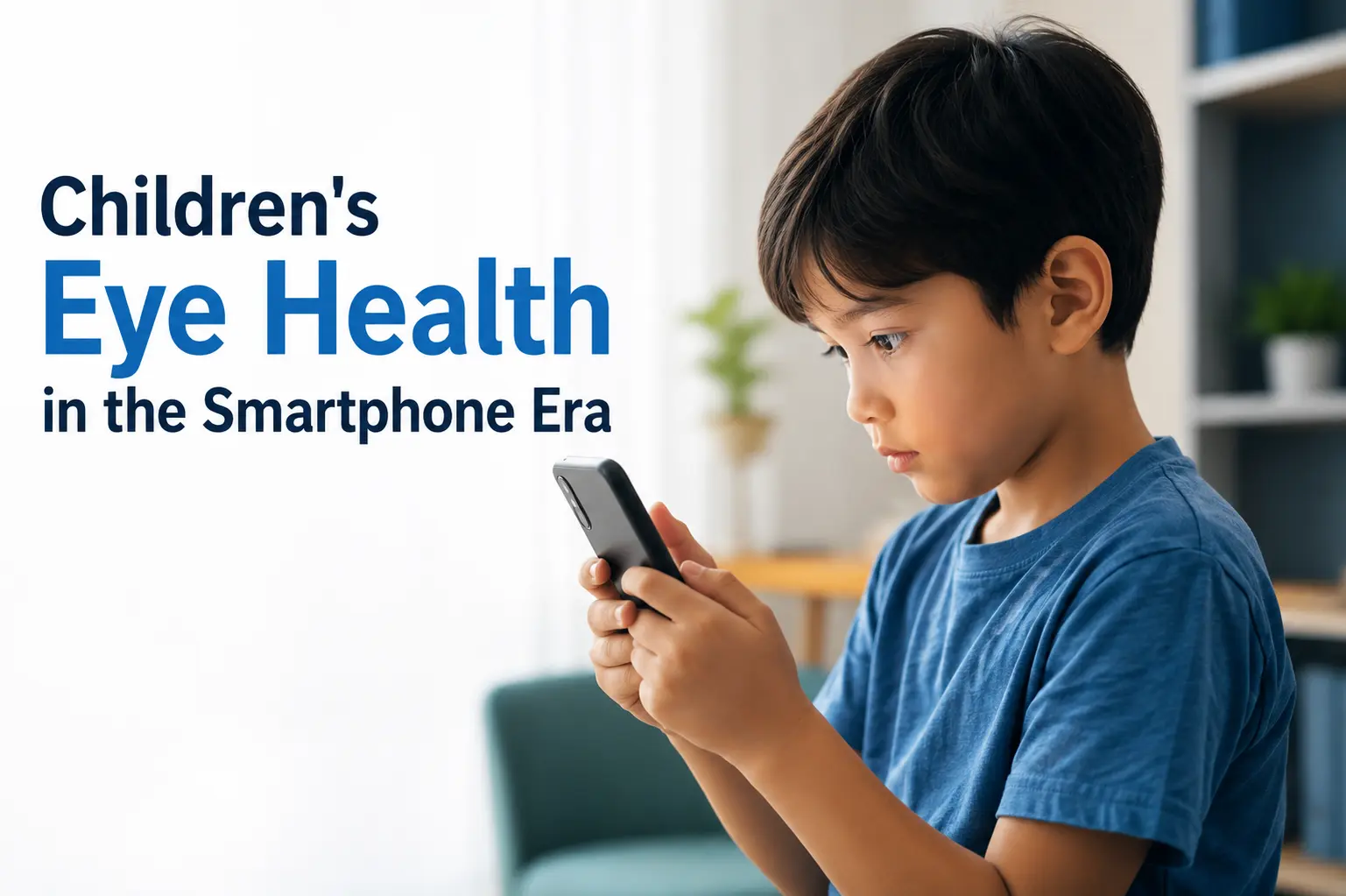
Picture this: Your child comes home from school, drops their bag, and immediately reaches for a smartphone. Sound familiar? In today's world, screens are everywhere — and children are their most loyal users. While this digital shift has its benefits, it has also quietly triggered a surge in child eye problems, pediatric eye care concerns, and children's eyesight issues that many parents are only catching when it's already late. At Susanjeevani Hospital, our eye specialists see this reality every day in their clinics, and they want every parent to be better informed.
This blog breaks down exactly what's happening to your child's eyes in the smartphone era — and the warning signs you must never brush off.
Why Children's Eyes Are More Vulnerable Than Adults'
Children are not just small adults. Their eyes are still developing — and that makes them significantly more susceptible to screen-related damage than grown-ups.
A child's lens is clearer and more transparent, which means it absorbs more blue light from screens. Their focusing muscles are still maturing. And unlike adults who feel discomfort and instinctively take breaks, children often push through eye fatigue without even realizing something is wrong.
Here's what makes it even trickier: children rarely complain about their vision. They assume everyone sees the world the way they do. By the time a parent notices a problem, the issue may have been quietly progressing for months.
The Smartphone-Eye Connection: What Science Actually Says
Research published in peer-reviewed ophthalmology journals has drawn a clear line between excessive smartphone use and multiple eye conditions in children.
One significant study found that when children play games on smartphones for just one hour, their blink rate drops from around 21 blinks per minute to fewer than 9. Blinking is the eye's natural way of keeping itself lubricated. When blinking slows down, dry eye symptoms follow almost immediately.
Beyond dry eyes, the bigger concern is myopia — or nearsightedness. Research suggests that extended near-work (staring at screens up close) reduces outdoor light exposure, which plays a key role in regulating eye growth. Less outdoor time + more screen time = a higher risk of myopia onset and progression.
According to global projections, nearly 50% of the world's population could be myopic by 2050. Children are at the center of this epidemic.
10 Warning Signs of Child Eye Problems Parents Should Never Ignore
This is the core of what every parent needs to know. These signs are often subtle, and that's exactly why they get missed.
1. Frequent squinting or tilting the head
If your child squints at the TV or tilts their head while reading, it's often their way of compensating for blurry vision. This is one of the earliest visible signs of refractive errors like myopia or astigmatism.
2. Sitting too close to the screen or TV
Children with nearsightedness unconsciously move closer to whatever they're watching to see it clearly. If your child keeps inching forward, don't dismiss it as a bad habit.
3. Rubbing eyes excessively
Occasional rubbing is normal. But if your child rubs their eyes constantly — especially after screen time — it could indicate dry eyes, eye strain, or an allergic reaction affecting the eye surface.
4. Complaints of headaches, especially after screen use
Headaches centered around the eyes or temples after using a phone or tablet are classic signs of digital eye strain. The eye muscles are overworked trying to maintain focus on a bright, close-up screen.
5. Holding books or devices very close to the face
Children with uncorrected myopia bring reading material close because their eyes can only focus clearly on nearby objects. This is a major red flag that should not be attributed to "reading enthusiasm."
6. Avoiding reading or activities that require close focus
On the flip side, children with farsightedness (hyperopia) or convergence insufficiency may avoid reading and close-up tasks because these cause discomfort or blur. Watch for a child who constantly avoids books.
7. One eye turning inward or outward
This is called strabismus or "crossed eyes," and it's a condition that requires immediate medical attention. Extended screen use has been associated with a rare but growing condition called acute acquired comitant esotropia — where one eye turns inward due to prolonged near screen viewing.
8. Sensitivity to light (photophobia)
If your child frequently complains about bright lights, squints outdoors, or avoids well-lit rooms, photophobia could indicate a range of eye conditions from uveitis to corneal issues.
9. Blurred or double vision
Blurry vision after screen time may seem temporary and easy to dismiss. But if it's a recurring complaint, it can signal convergence insufficiency, early myopia, or astigmatism.
10. Poor performance at school — especially with the board
If your child's grades are slipping and teachers report that they struggle to see the board, the culprit may be undiagnosed nearsightedness, not lack of effort or attention.
Hidden Signs That Are Even Easier to Miss
Beyond the obvious, there are subtler behavioral clues parents often overlook:
- Losing their place while reading — could signal tracking or convergence problems.
- Avoiding eye contact or seeming clumsy — may indicate depth perception issues.
- Covering one eye while watching TV — a possible sign of amblyopia (lazy eye) or a significant difference in vision between the two eyes.
- Complaints of "tired eyes" by afternoon — a sign the focusing muscles are under strain.
- Watery or red eyes after screen time — classic symptom of digital eye strain and reduced blinking.
How Smartphones Directly Damage Children's Eyes
Let's be very specific about the mechanisms at play, because understanding the "how" helps parents make better decisions.
Blue Light Exposure
Smartphone screens emit high-energy blue light. This light penetrates deeper into the eye than other wavelengths. In children, whose lenses don't filter it as effectively, prolonged blue light exposure is linked to disrupted sleep cycles and potential long-term retinal stress.
Reduced Blinking = Dry Eye Disease
As mentioned, blink rate drops dramatically during screen use. Dry eye in children isn't just about discomfort — it can affect the corneal surface over time if left unaddressed.
Accommodation Fatigue
The ciliary muscles inside the eye change the lens shape to focus on objects at different distances. Near-constant close-range screen use causes these muscles to cramp, a condition called "accommodative spasm" or pseudo-myopia, which can eventually develop into true myopia.
Reduced Outdoor Time
Natural light stimulates the release of dopamine in the retina, which slows the axial elongation of the eye (the process responsible for myopia). Children spending hours indoors on screens lose this natural protection.
What Age Should Children Get Their First Eye Exam?
Many parents wait until a school vision screening flags something — but school screenings only catch obvious problems and miss a wide range of conditions.
Here's a practical timeline:
- 6 months: First comprehensive eye exam.
- 3 years: Second comprehensive exam.
- Before Class 1 (age 5–6): Annual exams thereafter.
Don't wait for symptoms. Many eye conditions in children — including amblyopia (lazy eye) — are highly treatable when caught early and significantly harder to correct after age 7–8.
Practical Steps Parents Can Take Right Now
The goal isn't to eliminate screens — that's neither realistic nor necessary. The goal is smarter usage.
Follow the 20-20-20 Rule
Every 20 minutes of screen time, look at something 20 feet away for 20 seconds. Teach this to your child and practice it together.
Set Screen Time Limits
- Under 2 years: No screen time (except video calls).
- Ages 2–5: Maximum 1 hour per day.
- Ages 6 and above: Consistent limits with breaks.
Prioritize Outdoor Time
At least 1–2 hours of outdoor time per day is one of the most evidence-backed ways to slow myopia progression in children.
Optimize Screen Environment
- Keep screens at arm's length: Do not hold devices too close to the eyes.
- Reduce screen brightness: Lower the brightness when using screens in dark rooms.
- Use night mode or blue-light filters: Enable them during the evening whenever possible.
Schedule Annual Eye Exams
Don't rely on school screenings alone. Comprehensive pediatric eye exams at a qualified hospital give a complete picture of your child's ocular health.
When to See a Doctor Immediately
Some symptoms require same-day or urgent attention. Do not wait if your child experiences:
- Sudden loss of vision in one or both eyes.
- Visible white or yellow pupil (leukocoria).
- An eye turning sharply inward or outward suddenly.
- Severe eye pain or redness.
- Drooping eyelid that appeared suddenly.
- Flashes of light or a sudden increase in floaters.
These can indicate serious conditions like retinal detachment, cataracts, or glaucoma — all of which require immediate care.
Final Thought: Your Child's Vision Is Too Important to Wait
Children won't always tell you their eyes hurt. They don't know what "normal" vision is supposed to look like. That's why the responsibility lies entirely with parents.
The smartphone era is not going away. But with early detection, smart screen habits, and regular pediatric eye care, your child can grow up with healthy, strong vision — even in a screen-filled world.
Don't wait for the signs to become obvious. If anything in this blog sounds familiar, book a comprehensive children's eye exam today. Early action always leads to better outcomes.
